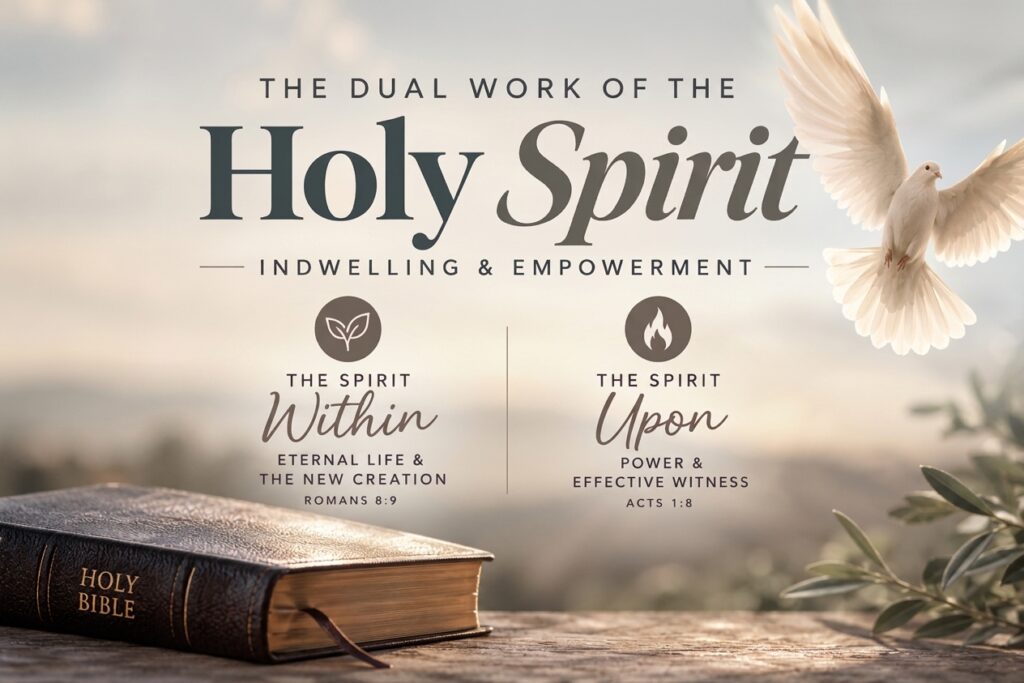
The Holy Spirit: Indwelling & Empowerment
By Pastor Chinedu Emmanuel
Acts 1:8 “But ye shall receive power, after that the Holy Ghost is come upon you…
The doctrine of the Holy Spirit is foundational to understanding the life and witness of the believer. However, basic foundational truths are frequently overlooked or misinterpreted due to unwarranted assumptions. A primary area requiring careful examination is the distinction between Old Testament spiritual empowerment and the post-resurrection baptism of the Holy Spirit. Under the Old Covenant, individuals such as John the Baptist operated under limited righteousness and restricted empowerment. They did not possess the baptism of the Holy Spirit in the manner available to Christians today, who experience the full measure of the Spirit. The baptism of the Holy Spirit is explicitly linked to a specific timeline following the glorification and ascension of Jesus Christ. As recorded in John 16:7, Jesus stated:
“Nevertheless, I tell you the truth. It is expedient for you that I go away… for if I go not away, the Comforter will not come unto you; but if I depart, I will send him unto you.”
This baptism was promised exclusively as a post-departure event, any spiritual manifestation or operation occurring prior to Christ’s ascension does not constitute the baptism of the Holy Spirit. To understand the totality of the Spirit’s ministry, one must examine the dual work of the Holy Spirit as outlined in John 14:17—specifically, the Spirit in the believer versus the Spirit upon the believer.
The Spirit Within — Eternal Life and the New Creation
The initial aspect of the Holy Spirit’s work is His indwelling presence, which brings the gift of eternal life to all who believe in Jesus Christ. Romans 10:8–10 clarifies that salvation requires genuine heart belief rather than mere superficial recitation:
“The word is nigh thee, even in thy mouth, and in thy heart: that is, the word of faith, which we preach; That if thou shalt confess with thy mouth the Lord Jesus, and shalt believe in thine heart that God hath raised him from the dead, thou shalt be saved. For with the heart man believeth unto righteousness; and with the mouth confession is made unto salvation.”
The disciples were the first individuals to believe in the resurrection of Christ. As recorded in John 20:19–22, Jesus appeared to them after His resurrection, showed them His hands and side, and dispelled their doubts. Once they believed in His resurrection, Christ breathed on them and said, “Receive ye the Holy Ghost.” This event was not the baptism of the Holy Spirit, as Jesus had not yet ascended. Instead, this was the moment the disciples received new life, which is the fundamental experience of being born again. Just as God breathed physical life into Adam during the first creation (Genesis 2:7), Christ, who is the life-giving Spirit (1 Corinthians 15:45), breathed spiritual life into the disciples to impart the new creation within their spirits.
Evidence of the Indwelling Spirit
The presence of the indwelling Spirit produces identifiable evidence in the believer’s life:
- Ignited Faith and Boldness: Following Christ’s post-resurrection impartation, the disciples transformed from fearful individuals hiding behind locked doors into believers who dwelt continually in the temple, praising and magnifying God (Luke 24:52–53).
- The Bond of Christian Love: In Acts 2:1, prior to the outpouring on Pentecost, 120 disciples were gathered in “one accord.” Unity of this scale is made possible only by the love of God poured into human hearts by the Holy Spirit (Romans 5:5). Love serves as the fundamental proof of regeneration (John 13:35; 1 John 4:8).
- The Fruit of the Spirit: The indwelling Christ acts as the vine, while believers act as branches (John 15:5). Fruit-bearing, which comprises love, joy, peace, longsuffering, gentleness, goodness, faith, meekness, and temperance (Galatians 5:22–23), is not the result of legalistic self-effort. Instead, it is the natural outcome of abiding in Christ by faith. As Philippians 1:11 notes, believers are filled with the fruit of salvation, which is the righteous character produced in their lives by Jesus Christ to bring glory and praise to God.
The indwelling Spirit, who is also the Spirit of Christ because there is only one Holy Spirit, is received through hearing and believing the Gospel of grace. In Romans 8:9, Scripture states, “But you are not in the flesh but in the Spirit, if indeed the Spirit of God dwells in you. Now if anyone does not have the Spirit of Christ, he is not His.” It is important to note that the Spirit of God is also referred to as the Spirit of Christ. The Gospel is not a message of condemnation, but one of reconciliation and eternal life offered freely to all (John 3:16–18). Through Christ’s redemptive work on the cross, we are justified freely by grace, meaning they are legally declared righteous and released from the penalty of sin without relying on human merit or works (Romans 3:23–24).
The Spirit Upon — Empowerment for Service
The second aspect of the Holy Spirit’s dual work is His coming upon the believer to empower them. In Luke 24:49 and Acts 1:8, Jesus commanded the disciples to wait in Jerusalem until they were endued with power from on high to be His witnesses. Scripture intentionally distinguishes between receiving life (the Spirit within) and receiving power (the Spirit upon). On the Day of Pentecost (Acts 2:1–4), the promised outpouring occurred. The Spirit came upon believers who had already received regenerated life from Christ. The initial physical evidence of this baptism was speaking in other tongues as the Spirit gave them utterance. New Testament records consistently demonstrate that the baptism of the Holy Spirit is an experience distinct from initial conversion:
- The Samaritan Believers (Acts 8:5–17): Philip preached Christ in Samaria, accompanied by miracles and healings. The Samaritans believed, were saved, and were baptized in water. However, it was not until Peter and John arrived and laid hands on them that they received the baptism of the Holy Spirit.
- The Ephesian Disciples (Acts 19:1–7): Paul encountered disciples in Ephesus and inquired, “Have ye received the Holy Ghost since ye believed?” They had believed under Apollos’s limited teaching about John’s baptism. After Paul instructed them in the full Gospel of Christ, they were baptized in the name of Jesus, and upon the laying on of hands, the Holy Spirit came upon them, manifesting in tongues and prophecy.
- The Household of Cornelius (Acts 10:43–48; 15:7–9): As Peter preached the Gospel to the Gentiles, they believed the message of forgiveness through Christ. Instantly, the Holy Spirit fell upon them, verified by Jewish believers when they heard the Gentiles speaking in tongues and magnifying God.
Addressing Theological Misconceptions
Clarifying the foundational aspects of the Holy Spirit requires addressing common theological misunderstandings:
- Unbelievers must believe in and confess Christ to receive salvation and the forgiveness of sins. Instructional warnings regarding personal sin and confession (such as 1 John 1:9) are directed toward believers, who possess the Spirit and are accountable for maintaining fellowship by walking in agreement with God’s Word.
- A common anxiety is that seeking the baptism of the Holy Spirit might inadvertently expose a person to demonic influence. Christ directly refuted this in Luke 11:11–13, assuring believers that an earthly father will not give a scorpion when asked for an egg; similarly, the Heavenly Father will give the Holy Spirit to those who ask Him.
- While God’s Word is spiritual in nature (John 6:63), the baptism of the Holy Spirit involves the literal person of the Holy Spirit coming upon the believer, as demonstrated on Pentecost, rather than the mere reading or hearing of text.
The baptism of the Holy Spirit is an essential empowerment provided to every believer in Christ. While the indwelling Spirit provides the spiritual life, righteousness, and fruit needed to reflect Christ’s character within us, the Spirit coming upon the believer imparts the supernatural power required for effective witness and ministry. Believers are called to understand this distinction, actively seek the Spirit’s empowerment, and fulfill the commission of Christ through the operation of spiritual gifts.
Pastor Chinedu Emmanuel is the Senior Pastor of Fountain of The Living Word Church, East Orange, New Jersey.